
The Soul of the Harvest: Tankoro Lemon
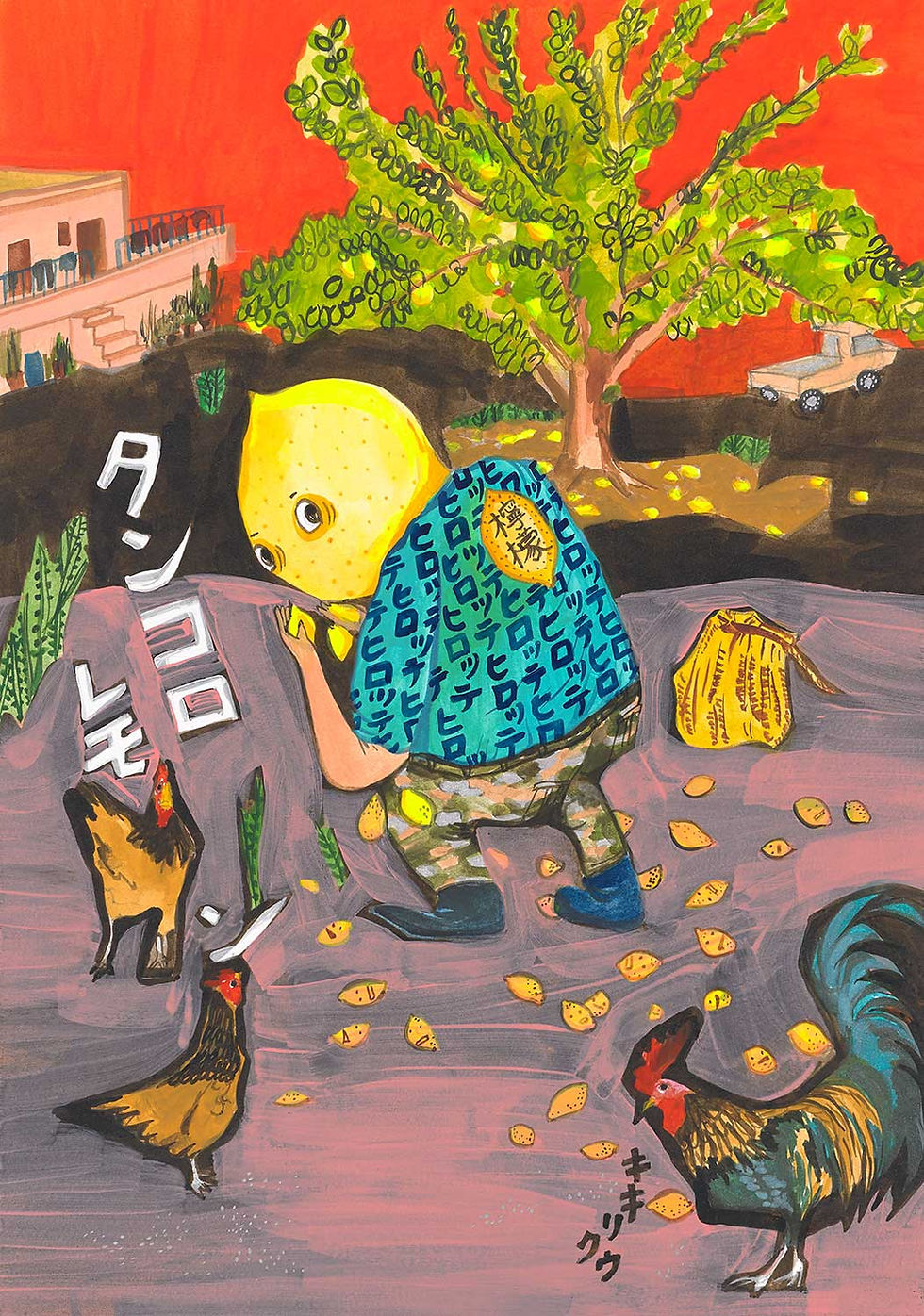
As an artist, I have always been fascinated by the idea that objects have souls. In Japanese folklore, this concept is embodied by the Tsukumogami—ordinary household items that, after reaching their 100th birthday ( actually "Tsukumo" means 99), gain a spirit and come to life. Among these strange and wonderful beings is the Tankoro (or Tankoro-rin), a Yokai born from a wasted persimmon that has fallen from the tree and been forgotten.
In my painting, Tankoro Lemon, I have taken this ancient spirit of the neglected fruit and transplanted it into a new landscape.
The Concept: The Resurrection of the "Forgotten"
The original Tankoro-rin is often depicted as a monk-like figure with a persimmon for a head, wandering the groves at night. It is a creature born of a specific kind of melancholy—the sadness of a harvest that was never picked.
In Tankoro Lemon, I’ve reimagined this spirit within the vibrant, acidic world of the lemon grove. My figure isn't just a monster; he is a guardian of the "lost." Dressed in a patterned shirt (with Japanese text ヒロッテ meaning "pick it up" and 檸檬 meaning lemon) and camo trousers (typical farmers outfit in Cyprus), he is a modern laborer of the supernatural. He stoops among the chickens, gathering the lemons that have hit the dirt—the ones the commercial farmers would deem "imperfect" or "waste."

Why the Lemon?
While the traditional Yokai is tied to the
autumn persimmon, the lemon carries a different energy. It is sharp, bright, and synonymous with the sun-drenched landscapes of the Mediterranean (specifically here in Cyprus). By merging the Japanese Tankoro with the lemon, I am exploring the intersection of my own heritage and my current environment.
The lemon head, with its textured, pitted skin and wide, soulful eyes, looks back at the viewer not with malice, but with a quiet, working-class dignity. He represents the overlooked beauty in the discarded.
For the Collector: Building a Modern Mythology
Collectors are often drawn to my work because of this "Tourist Yokai" aesthetic—the idea that spirits aren't just found in ancient temples, but are currently on vacation, working in our gardens, or lounging by the hotel pools.
Though this Tankoro Lemon painting has already found its permanent home, it remains a pillar of the world I am building. When you collect a piece from this series, you aren't just acquiring a study of color and form; you are acquiring a piece of a "living folklore." You are bringing a guardian into your space—one that reminds us to look closer at the world around us, to find the spirit in the mundane, and to never let a good harvest go to waste.
I am constantly working on new iterations of these "Transplanted Yokai." To my collectors, thank you for joining me in this exploration of the strange, the bright, and the supernatural. Stay tuned for the next harvest.

Comments