
A Folklore Fact: Umibōzu — The Sea Monk Who Rises from the Deep
Among Japan’s many sea-born yokai, Umibōzu (海坊主) remains one of the most unsettling. Sailors describe it as a colossal, shadow-black figure emerging silently from calm waters—only the smooth, bald dome of its head visible at first, like a monk rising from meditation. But its arrival is anything but peaceful. The sea churns, winds shift, and the boundary between the living and the drowned seems to thin.

Legends say Umibōzu is the restless spirit of a drowned priest, a being caught between devotion and despair. It approaches ships at night, demanding a ladle. If given an ordinary one, it uses it to flood the vessel; only a bottomless ladle can confuse the creature long enough for escape. This strange ritual—half menace, half negotiation—captures the uneasy relationship between humans and the ocean: reverence, fear, and the hope that cleverness might outwit fate.


The Duality of Creation and Destruction
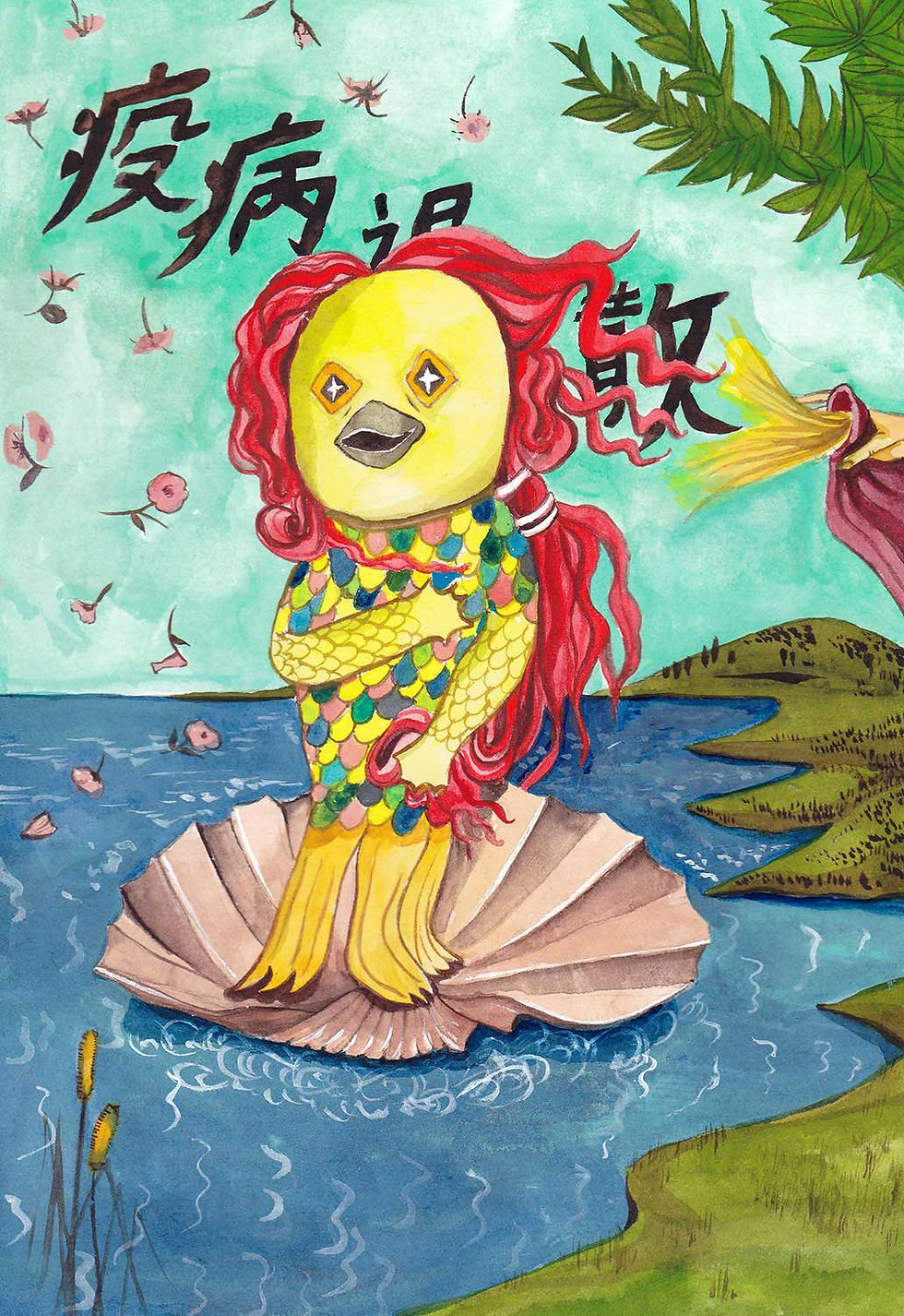
In my own artwork, I often pair Venus—the archetype of birth, beauty, and emergence from the sea—with this dark maritime spirit. Venus rises on a shell, radiant and desired; Umibōzu rises as a warning, a reminder of what the sea also holds. Together, they form a duality: creation and destruction, allure and terror, the luminous surface and the unknowable depths.
The Symbolism of Umibōzu
Umibōzu is not merely a monster. It is the sea’s shadow-self—an embodiment of everything we cannot see beneath the waves, yet feel all the same. This creature represents the fears we harbor about the ocean. It reminds us of the unknown. The ocean is vast and mysterious. It holds secrets and stories untold.
Artistic Interpretation
In my work, I explore these themes. I use color and form to convey emotion. Each brushstroke reflects the tension between beauty and fear. I aim to capture the essence of Umibōzu and Venus. Their contrast speaks volumes. It invites viewers to reflect on their own relationships with nature.
The Ocean's Influence
The ocean influences many artists. It inspires awe and respect. Yet, it can also evoke fear. The stories of yokai like Umibōzu serve as reminders. They highlight the power of nature. They remind us to tread carefully. The ocean is both a giver and a taker.
Conclusion
Art is a bridge. It connects us to our fears and hopes. Through my work, I share my vision. I aim to foster connection through art. The interplay between Umibōzu and Venus illustrates this. It invites contemplation. It encourages dialogue about our relationship with nature.
In this way, I hope to engage a global audience. I want to participate in significant international exhibitions. My goal is to create thought-provoking pieces. They blend cultural narratives and contemporary themes.
The journey of art is ongoing. It evolves with each piece. Each creation is a step towards understanding. I invite you to explore this journey with me.

Comments